How to Smoke the Perfect Brisket
With a little time and patience, you can learn how to smoke a brisket to make the best feast of your life.
Brisket has long been one of the most underrated meats on the planet, in my opinion. While it was once considered a less desirable cut, pitmasters have known for years that when brisket is cooked low and slow, it transforms into something truly special.
Rich, beefy, and packed with flavor, a properly smoked brisket is one of the most tender, melt-in-your-mouth meals you can serve.
Brisket Cooking FAQ
The secret to great brisket isn’t complicated—it simply requires patience. Brisket rewards those who are willing to give it time. With just a few ingredients, a smoker, and a little planning, you can feed a crowd and create a meal that people will be talking about long after the last slice is gone.
Watch this video for a step-by-step demonstration of how to smoke the perfect brisket.
Brisket is always an impressive centerpiece, whether you’re preparing a cozy family dinner, hosting a backyard barbecue, celebrating Father’s Day, serving Easter lunch or Christmas dinner, or feeding friends on the Fourth of July,
One of the best things about brisket is that it requires very little hands-on effort once it’s on the smoker, as with most smoked meats.
What is brisket, exactly?
Many people ask what the brisket cut is — where it is located on the cow. This cut comes from the lower chest of the cow, an area that is full of fat, muscle fibers, and collagen.
Texas BBQ chefs often distinguish between two cuts of brisket:
- The flat or “first cut”: a lean, evenly thick section that is easy to slice uniformly
- The point or “second cut”: a thicker, fattier, more flavorful section that comes to a rounded point
How long does it take to cook brisket?
And why does it take so long? Here is where the “patience” part comes in. Thanks to all that muscle and connective tissue, this is a cut of beef that you need to cook slow and low. That is why smoking is such a great way to prepare brisket. Depending on the size, it will take between 8 and 18 hours to smoke the meat to perfection.
To cook brisket, a general rule of thumb is to allow 1 to 1.5 hours of cooking time per pound when smoking at 225° to 250°F. I set my smoker to 235°F.
- Small Brisket (8–10 lbs): about 8 to 12 hours
- Large Brisket (12–16 lbs): 14 to 18 hours
Note that these times are just guidelines. You will need to cook the brisket until it is tender with an internal temperature of 200° to 205°F.
How to Smoke a Brisket, for Beginners
A great brisket isn’t about fancy ingredients or complicated techniques. It’s about patience, temperature control, and giving the meat the time it needs to become something extraordinary. Follow these simple steps, trust the process, and you’ll have a brisket worthy of any holiday table, backyard gathering, or weekend feast.
Trim the Brisket
Before you begin, take a few minutes to trim your brisket properly. Removing excess fat helps the seasoning adhere to the meat and allows the smoke to penetrate more effectively. Leave about 1/8 to 1/4 inch of fat across the surface. This thin layer of fat will slowly render during the cook, helping keep the brisket moist and flavorful.
Another important trimming step is to remove the large, hard pocket of fat that sits between the point and the flat of the brisket. Many pitmasters refer to this as the “deckle” or hard fat seam. Unlike the softer fat cap on the exterior, this dense fat will not fully render during cooking, no matter how long the brisket stays on the smoker.
Season the Brisket and Let It Rest
After trimming, liberally season the entire brisket with salt and pepper, making sure to coat every side evenly. Don’t be afraid of the seasoning—brisket is a large cut of meat and can handle it. Once seasoned, place the brisket on a wire rack set over a sheet pan and refrigerate it uncovered for 12 hours or overnight.
This overnight rest is one of the most overlooked brisket tips. Leaving the brisket uncovered allows the surface to dry slightly, creating what’s known as a pellicle. This tacky surface helps smoke cling to the meat and contributes to a deeper bark during cooking.
The next day, remove the brisket from the refrigerator and allow it to sit at room temperature, uncovered, for about one hour. Taking the chill off the meat promotes more even cooking once it goes into the smoker.
Crank Up the Smoker
While the brisket is resting, preheat your smoker to 235°F. One of the most common mistakes new brisket cooks make is chasing temperature swings throughout the cook. Consistency is more important than perfection. Focus on maintaining a steady cooking temperature and let the smoker do the work.
Here is something important to keep in mind when cooking your first brisket: the meat may hit a “stall” during cooking. The stall is a long plateau at which the internal temperature stays around 150°F. This cooking slowdown occurs when evaporation of liquid cools the meat.
Cook the Brisket
Place the brisket fat side up in the smoker. As the fat slowly renders, it will help baste the meat throughout the cook. Close the lid and resist the temptation to check it too often. Every time the smoker is opened, valuable heat and smoke escape.
First Stage: Allow the brisket to smoke for approximately 6 hours. During this stage, the bark develops and the brisket absorbs most of its smoke flavor. Around 165°F internal temperature, you’ll likely encounter what pitmasters call “the stall.” This is when the brisket seems to stop cooking for several hours as moisture evaporates from the surface.
Second Stage: When the brisket reaches 165°F, wrap it tightly in pink butcher paper or aluminum foil. Wrapping helps push the brisket through the stall while retaining moisture. Many pitmasters prefer butcher paper because it preserves the bark better, while foil retains more moisture. Both methods work well.
Return the wrapped brisket to the smoker and continue cooking for another 4 to 6 hours, or until the internal temperature reaches between 200°F and 205°F. Temperature is a useful guide, but tenderness is the true indicator of doneness. A probe or thermometer should slide into the brisket with very little resistance, almost like inserting it into softened butter.
When It’s Fully Smoked, Let It Rest Again
Once the brisket is finished, remove it from the smoker and place it on a cutting board or in a cooler to rest. Resting is one of the most important steps in the entire process. Allow the brisket to rest for at least one hour before slicing. During this time, the juices redistribute throughout the meat, creating a more tender and flavorful final product.
How to Store and Reheat Leftovers
If you have leftovers, brisket stores beautifully. Wrap sliced brisket tightly in foil and refrigerate for up to 7 days, or place it in freezer-safe bags and freeze for up to 6 months.
To reheat, lightly brush the sliced brisket with olive oil, wrap it in foil, and warm it in a 350°F oven for about 10 minutes, or until heated through. Be careful not to overcook it during reheating, as brisket can dry out quickly once it has already been cooked.
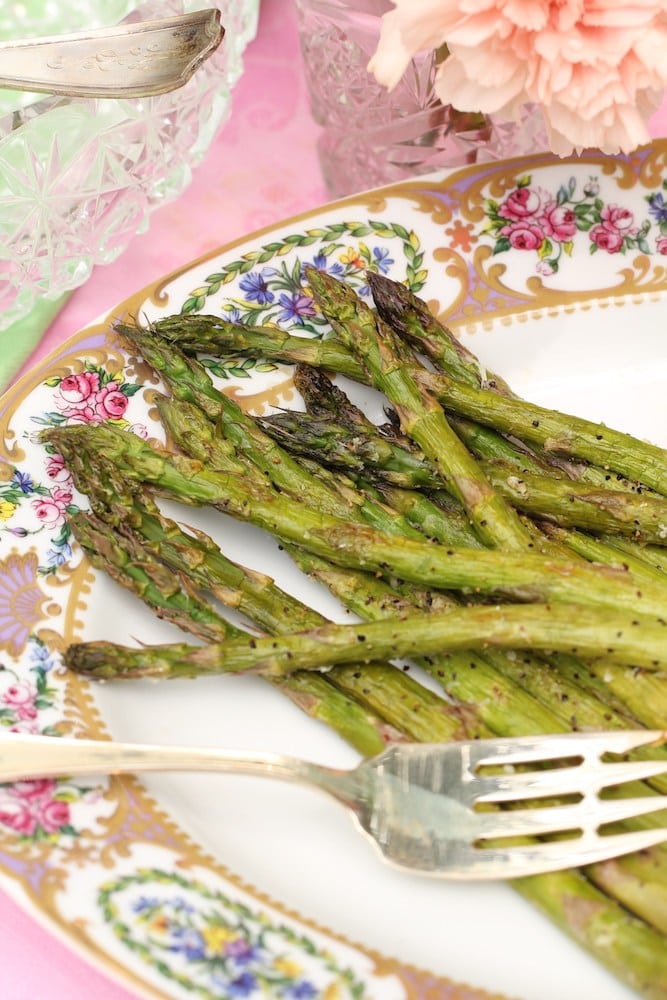
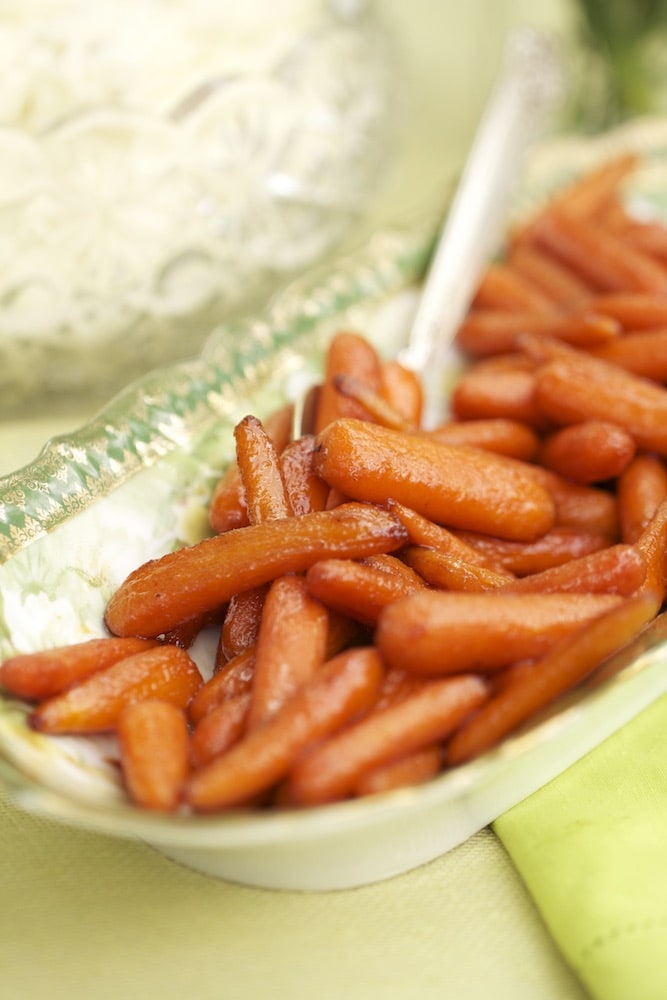
What sides go great with brisket?
Here are just a few ideas for what to serve with brisket.





Smoked Brisket Recipe
Ingredients
- 10 to 13 lbs brisket
- Kosher salt
- Freshly ground pepper
Instructions
- Prepare brisket by removing all but about 1/8 to 1/4 inch of fat on all sides of the brisket. Liberally sprinkle salt and pepper all over the brisket rub in thoroughly. Place the brisket on a wire rack over a sheet pan and refrigerate for 12 hours or overnight. Leave uncovered to allow air to circulate around the brisket, creating a dry surface for better smoke penetration.
- Remove brisket from the refrigerator and allow it to come to room temperature, uncovered for about one hour.
- Crank up your smoker to 235°F.
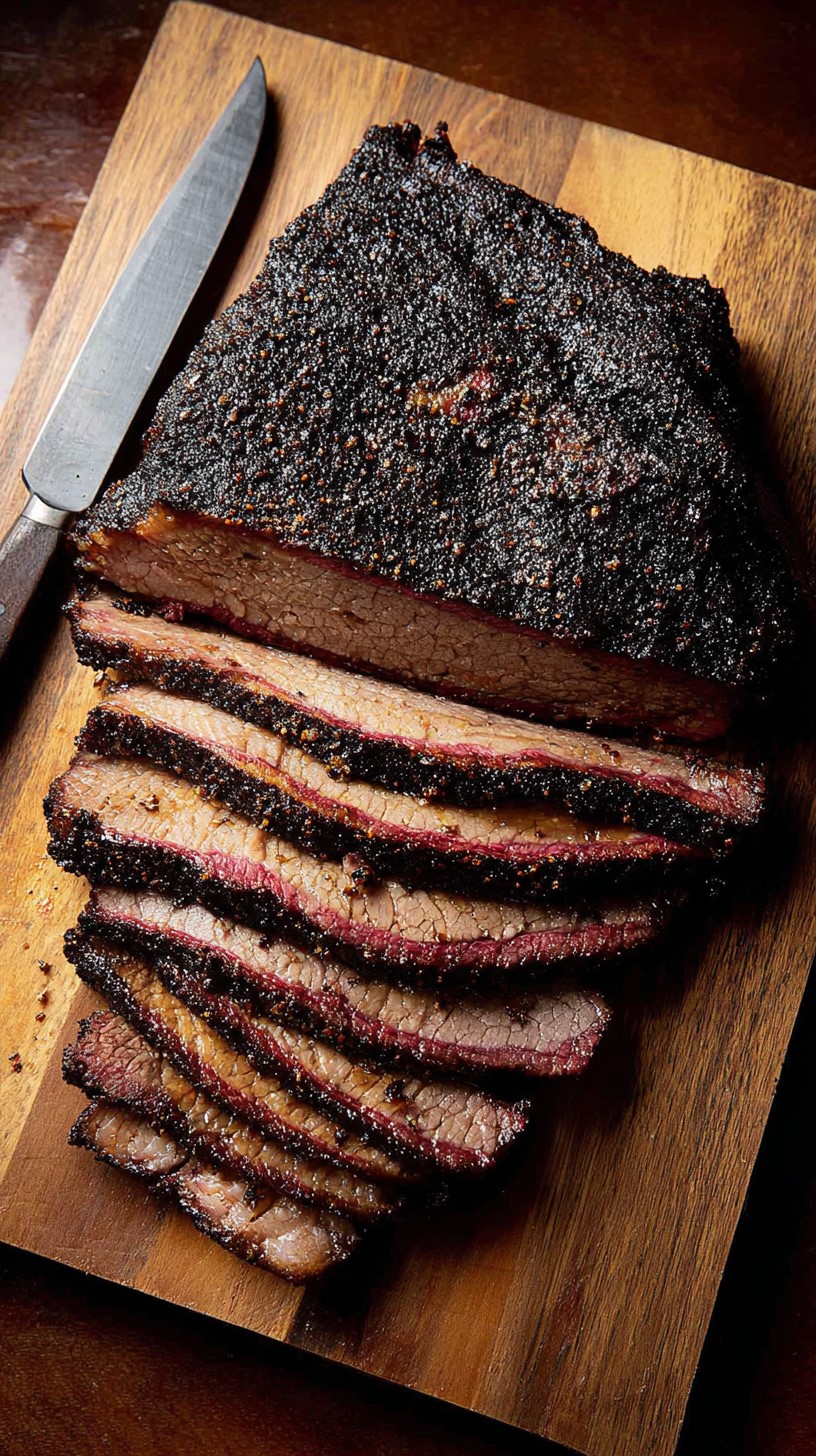
- Place the brisket fat side up in the smoker and allow to smoke for about 6 hours. When the brisket reaches an internal temperature of 165°F, wrap the brisket in pink butcher paper or tin foil. Continue to smoke for another 4 to 6 hours or until the internal temperature reaches 200°F to 205°F. Remove meat from the smoker to a cutting board and allow to rest for at least an hour before slicing.
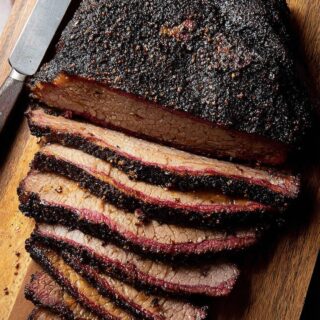
- Slice brisket across the grain. You will have to pay attention as the brisket grains run different directions throughout.
- To store, wrap sliced brisket in tin foil and refrigerate up to 7 days, or freeze in freezer safe bags for up to 6 months.
- To reheat brisket, brush olive oil over the sliced meat and wrap in tin foil. Place in a 350°F oven for about 10 minutes or until just warmed, not hot. Do not overcook.