Homeschool Journey: 5 Things I Wish I’d Known before Homeschooling
Homeschool is a huge part of our family life, as folks familiar with my blog may know. You probably also know that I am married to Scott, an avid hunter and outdoorsman who is also a dentist on the side! He’s a brilliant man who has been the most amazing husband and father. We have seven children and have homeschooled all of them.
Yes, I am a lawyer turned homeschool mom of seven kids. I practiced law a little while my boys were small, but eventually left it for a much higher calling…my children.
Many people can be lawyers, but I am the only wife of my husband — thank the Lord — and the only mother to my kids. I believe the responsibility of raising kids is THE MOST IMPORTANT THING I WILL EVER DO.

The Choice to Homeschool
After considering the education options — public school, private schools, public charter schools, online school — Scott and I chose to make home education part of our efforts to fulfill our sacred responsibility as parents. In fact, we felt led to it.
When we started our homeschool journey, I was not by any means a homeschooling expert. However, a lot of information is available to anyone embarking on home schooling. You have to be your own best advocate.
Naturally, as a lawyer, I researched state law and legal protection for homeschool families. In designing homeschool instruction for our children, I considered mandatory subjects, amassed resources, and sought guidance in planning lessons. Legal requirements are complex and vary by state in the United States, so your research likely will take you down different paths than mine.
In future posts, I’ll share detailed information and primary sources. In this post, I’ll focus on some basic lessons that I learned along the way as a homeschooling mom.
My Homeschooled Children: Where are they now?

My oldest child is 30, and my youngest is 15. Before I launch into the things I wish I’d known, I want you to know where my homeschooled children are now and how they’re doing.
- My oldest, Forrest, is a dentist who is married to a brilliant girl, and they have made me a grandmother!
- My second oldest, Hampton, is a lawyer, who married another lawyer whom I love dearly. She is in JAG in the air force.
- My 3rd oldest, Graylyn, has her MBA, is an incredible, sought-after grant writer, and works in an investment firm.
- My 4th and 5th, Howlett and Mary, are civil engineering students at Auburn University, and Anna is a pre-law student at Auburn University at Montgomery.
- Milly is in the 10th grade, just got her driver’s permit, plays the piano and violin, and has a cake making business. She made the beautiful cake in this post!
1. You don’t have to have the perfect space ready, and you don’t need to teach school exactly like traditional schools.
One of the beauties of homeschooling is the extra room for creativity and flexibility. That breathing room is way more valuable, in my experience, than having the perfect classroom space.
To facilitate excellent education, you don’t need the room, table, chairs, exact times (though a schedule is an important thing to have in place–see step 3 on time management below). After about the first week — no, day — we didn’t even use the school room I’d set up! Can you believe that? We stayed in the den or dining room. Also, we didn’t do school at the exact same time every day, though we did do school pretty much every day. More on this a little later.
Life Is a School Room
Education is certainly not found only during school hours; it’s a lifestyle to be nurtured.
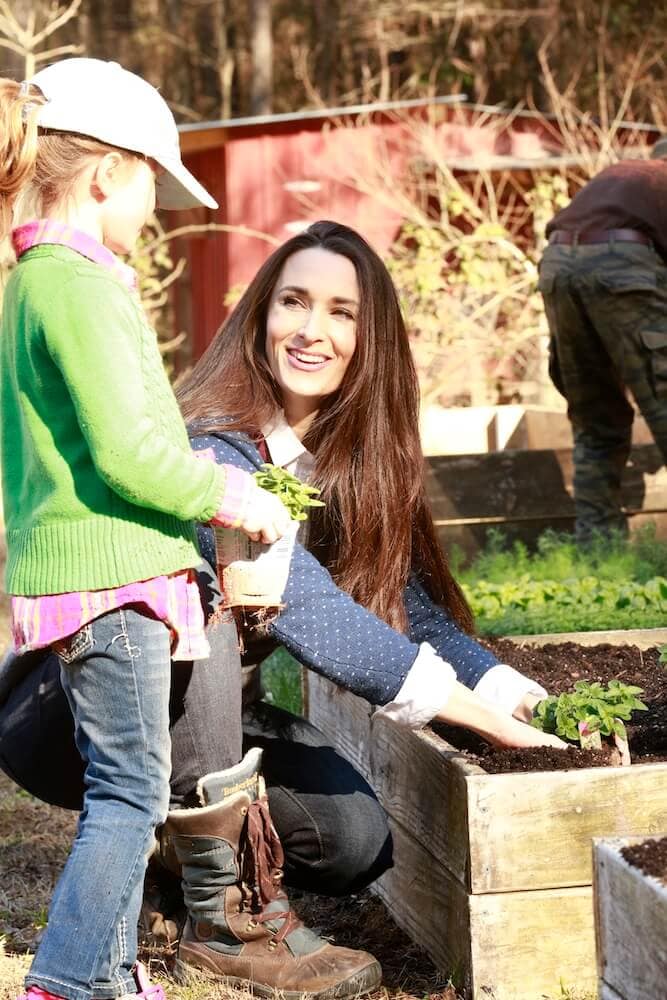
Our schedule changed every school year, depending on the needs of the family. Life and school changed if there was a new baby (which is an education in itself on many levels), if Scott needed me to help manage his office as I did the hiring and firing, if grandma was coming over, if they needed momma instead of a teacher, if the kids were sick, and so on. When you are living life, not everything is going to be perfect.
If you let go of the traditional school mentality and expectations, you will have so much freedom to be spontaneous. Education will happen above and beyond your homeschool curriculum because you’ll be looking at just about every opportunity as a teaching opportunity.
You can teach reading as you put the kids down for bed. When you’re playing “go to the store,” you can have real money out and teach about counting money, fractions (like ¼ is ¼ of 100 – .25), and social skills.
If your children are curious about something, you can take the time to help them get the books they need for that, or help them do research on the topic.
Shape Your Curriculum around Their Interests
You know your kids better than anyone. Since you’re homeschooling, you can mold the entire semester around their interests. I don’t mean that the child should determine their own curriculum, but if they are interested in planets, for example, you can incorporate that spark of curiosity into science, language arts, math, and even history. It takes a little bit of extra planning, but they will become experts on their subject of interest, and they will take off learning in every discipline that touches on it.

Traditional schools HAVE to teach in the lecture-then-test format since they have so many kids in one class. If teachers could focus on the best way to educate each child instead of teaching 40 children to pass standardized tests, I believe our schools would look very different than they do now.
We don’t need to mimic traditional schools. We have the luxury of knowing our kids and shifting our teaching style to match our children’s learning styles, including any special needs they may have.
That brings me to the next thing I wish I’d known before homeschooling.
2. It’s essential to know your childrens’ learning styles.
With the busyness of life, some people don’t see their kids — really look in their eyes and “see” them — more than about 15 minutes a day. I’m sure you all are doing more than this, but life is incredibly busy, and if we don’t make it a priority to know our kids, we won’t know them. There are many other demands pulling at us, and they will take precedence if we let them.
According to the population reference bureau, mothers spend 12.7 hours a week with their children and father’s 6.7 hours a week. This is not for the homeschooling parents, but those who work outside the home, take their kids to extracurricular activities, and just get through the minutiae of each day.
What kind of learner is your child? By spending time with your children throughout the day, you can tell very early on if a child learns best by seeing (visual), hearing (auditory), reading and writing (verbal), hands on (kinesthetic), using logic (looking for patterns to make connections), through stories and interactions (social), or by being alone and pondering (solitary). Each child is different and has his or her own learning style.
Know Your Child’s Mind
You also learn the character of your child. You’ll learn to know when they are being testy or rebellious or if they truly aren’t making connections to what you are teaching.

For instance, my oldest son could figure out multiplication problems and understand dimensions in objects when he was 3 years old. Once when we were on our daily walk, he noticed a semi truck and understood from seeing 9 wheels on one side that the truck had 18. He surprised me with this information as he noticed the truck on our daily walks. He could look at blueprints for a bridge my stepdad had on the table one day and see the bridge clearly, whereas I just saw a mess of lines. In other words, my son was very much a logical and visual learner.
What Forrest had trouble with was reading. He had known all his letters and the sounds they made from the time he was about 3, but he could not put the letters together to make words. At times, I thought: this boy is brilliant, so he must just be being obstinate. It was very upsetting. I knew we were homeschooling for the long run, and we could afford to go a few weeks with me reading to him and not having him read to me, so we took a break and I prayed hard. I’m not sure how I came up with covering up every word on the page except the one I wanted him to read, but it worked! He just had been overwhelmed with all the words and letters.
Know Your Child’s Heart
Pray, read, research, discover.
Along with helping you identify your children’s academic gifts and challenges, homeschool helps you know and nurture their hearts. Read books to them and then ask them what they think about someone’s decision or something pertaining to the reading.
There are a few books, such as Shepherding a Child’s Heart and 5 Love Languages for Kids that are very helpful. You can also have fun taking personality tests together if they are old enough.
What time is spent better than learning how to love your entire family, each as their person? These are the people you were put here to know and minister to. However, I recommend not getting caught up in conscious “ministry” during these years. Know you are ministering to your children by focusing your attention on them, meeting their needs, and feeding their bodies, minds, and hearts. Lord knows, you already will have your hands full with time management.
Which brings me to the next thing I wish I’d known before homeschooling.
3. Time management is a top priority for home education.
Time management is a must when homeschooling, mainly because we are working from home and there are a million and one things that have to be done, along with homeschooling. You don’t have to stick to a rigid schedule every day, but you do have to plan your days.
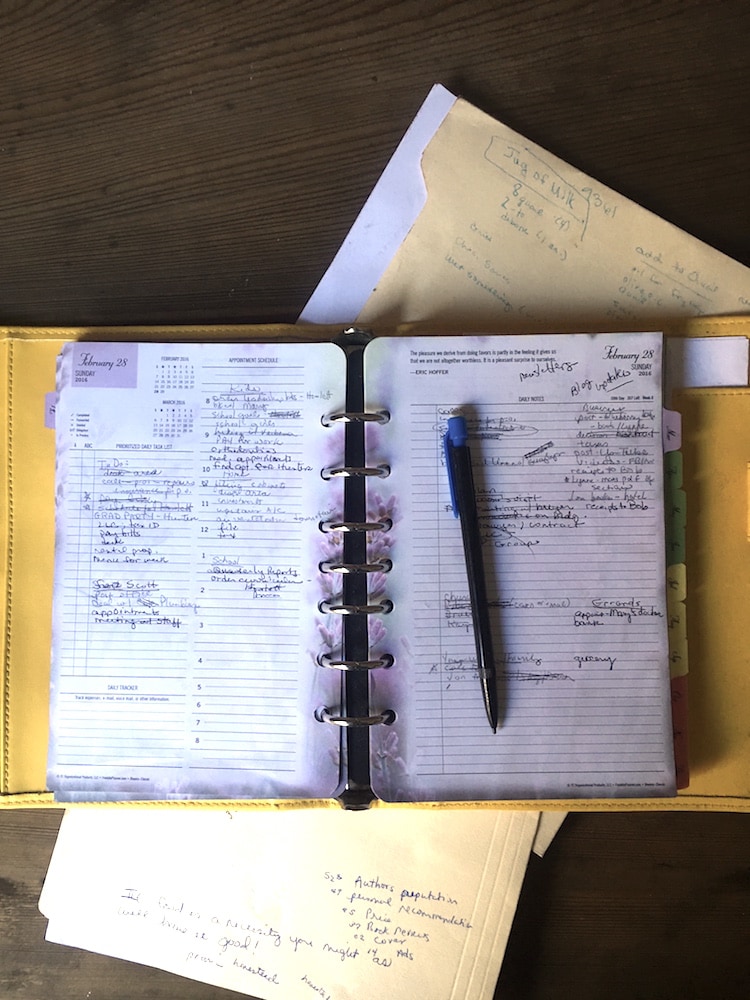
Plan Your Homeschool Days
I mentioned that there is and should be flexibility taking into account learning styles. There will have to be flexibility here, too, BUT you need a plan.
I have tackled this challenge in many ways, but what I find is if I plan the year, school life gets done and I stay sane on the insane days.
- Write each child a list of daily assignments that must be completed.
- Laminate it – it is in stone for the year.
- Inspect what you expect.
This type of planning takes more time upfront, but it is going to save your sanity!
I do the planning with each individual child in mind. I write down things I’ve noticed about that child: their strengths and weaknesses in character at first and then academically. Assessing if they are on par with their grade level is important, but I also think about their learning style and assign accordingly. I assess their ability to focus and for how long.
I then write a list of non-negotiables.
Daily Homeschool Scheduling
Here is what a basic, day-to-day homeschooling schedule looks like for our family, including bible study. Actual assignments vary by age, of course — high schoolers will have a more challenging schedule than elementary-school age children — but these are the basics.
- Corporate Bible Time with Family
- Bible Time Alone
- Journaling (Writing) or Writing Letters to Grandparents, Sibling, etc.
- Math and Science
- Reading and Vocabulary — with me if under 8, otherwise on their own with a summary at the end of the day
- Exercise — can be different every day and may be with the other kids, such as local homeschool groups
- Chores — used to include one of the kids watching the baby for 15 minutes so I could check homework, etc.

Making Assignments
Depending on the grade, I fill in how many pages and what books, worksheets, research papers, creative writing papers, field trips, character building assignments, etc. I expect them to complete.
Inspecting Schoolwork
I then write down what time they seek me out to show me their work and for me to check it and tutor them where they are in need. I adjust as we go.
Our homeschool covering (as part of a charter school in Alabama) requires that we turn in their grades and progress every semester. I fill this out before the semester begins to make me accountable. This requires you to put your goals for your kids on paper. I have noticed even when I haven’t looked at it, since I planned it and put it on paper, it gets done.
Morning Homeschool Meeting
Every morning we meet in the living room for Bible and for a run-down of the day and go over extra activities, timelines, and when I am going to meet with whom.
This does not work like clockwork every day — in fact, most often, it doesn’t. The important thing is that I have this schedule in place. This is the expectation I have of the kids who are my students. As they reach these goalposts, they begin taking ownership for their education.
This brings me to the next thing I wish I’d known before homeschooling.
4. Aim high and expect more from your kids.
Your kids are smarter than you think. They can do chores and do them well. They can attempt their assignments and try their hardest. Although they may not always “get” the assignment, you should see character and responsibility developing. They will usually live up to your expectations if there aren’t too many arbitrary rules.
God gave 10 commandments that all the little rules seem to fit into. Don’t overwhelm your kids with a lot of rules, but what rules there are, be consistent in seeing to it they follow them.
Kids do get lazy, make mistakes, and sometimes don’t get the assignments just like we do as adults, BUT they can do what you ask of them — of course, within reason.
I say “within reason” because if you attempt to give an 8 year old the entire Sonlight curriculum with all subjects for the year, there is no way on earth they can complete it. It would take 14 straight hours a day to accomplish all of that.
This is where knowing your child matters: be mindful of their development stage and abilities and how long they can focus.
Age-Specific Rules of Thumb for Homeschool Instruction
Here are the rules of thumb I learned from experience and study.
- A 7-8 year old child can focus their attention 15-20 minutes at a time. A lot of learning takes place in 10 minutes! I changed activities every 15-20 minutes until they were about 10. We still did school but not the same subject.
- A 9-10 year old child can focus 20-30 minutes at a stretch.
- An 11-12 year old child can focus 25-30 minutes.
Also, I want to mention here that school is not just book learning. Above and beyond academic study, kids are still learning tons of information and acquiring skills when they are playing, cooking, sewing, cutting the grass, gardening, and so much more.
My daughter in law’s mother is a teacher for a co-op homeschool. She says that often, the homeschooled kids are academically far behind when they first come in. You never know what may happen to cause your kids to have to go to traditional or private school. You don’t want them to fall behind their grade level. If they have to go to school for some unknown reason, don’t set them up for failure.
I will say here, though, that if your child isn’t getting a concept, it’s ok to put that subject or at least that skill set (fractions? algebra?) on hold and focus on something else for a while. I have found that some kids sometimes just need their brain to catch up to their body. Given 6 months, they may run right through what they were having trouble with before.
5. Put your marriage first, and homeschool sucess will follow.
No amount of education can empower children for a successful future more than growing up in a happy, healthy, loving home where mutual trust, love, respect and hard work take place. The world is a harsh place, and your children will enter it little by little. The stronger their home foundation, the freer they will be to pursue and take risks for the betterment of society. Fear of failure will be at a minimum, and they will remain confident that if they fail, they have a safe place to retreat and regroup.
As homeschooling parents, your relationship will set the entire tone of your child’s world, whether peaceful or hostile, since most of your child’s time will be spent under your roof. Therefore, the environment you create will enhance or diminish your child’s education and future academic performance.

Home Life and Homeschool Go Hand in Hand
Research supports the idea that a harmonious family life is an important family for successful homeschool learning.
- Brain imaging studies suggest that growing up in a disadvantaged or stressful environment can cause the brain to develop differently (Gianaros, PJ).
- Research has also shown that a negative home environment during the early years of life can lead to impaired development, including poor language skills (Evans, GW), behavioral problems (Trentacosta, CJ), and deficits in school readiness (Vernon-Feagans L).
- A child’s early home environment has also been linked to longer-term outcomes, including high school graduation (Duncan GJ), teen parenthood (Green, R), and adult employment and earnings (Aaronson, D).
Home Is a Microcosm of the World
For a child to be in the optimum position to learn, there is a deep need to know that the people they love and trust the most love and trust each other. I am convinced that nothing is more important to a child’s education than the atmosphere of the home. Home is the springboard from which your children will launch into the world. It must be in top condition, and that rests on your marriage.

This union is top priority after submitting to God. A child’s worldview is formed from the government of the home he sees. Home life and the family are a microcosm of the world. Children will learn how to respond to the world and authority from within the walls of their homes.
When you keep each other first, kids feel secure and confident knowing you both are in agreement in raising them, there is hope for their own fulfilling future, and they are more secure in your love for them.
Our kids need to see us outwardly loving and respecting one another, having fun together, and placing one another above the other. It not only gives them hope for the future, but grounds them in the kind of love you love them with – an unfailing and undivided love no matter what.
6. Bonus: You are a parent before being a teacher.
Homeschool moms, before being an academic educator, you are a wife and mother. You will be challenged with what hat to wear a lot of your day. Am I teacher (according to the clock, that’s what I am supposed to be), but the phone rings and it’s your husband, or one of the kids is distracting the other kids from learning and needs to learn how to behave. What do you do?
This is something you will have to rely on the Holy Spirit to show you.
For example, Scott might call during a math lesson or while I was reading to the kids, or putting one down for a nap. I would know he was calling in between patients and was not in his office often for me to call back, so I’d have the decision:
Do I answer while I am in the middle of school and risk losing their attention altogether? Do I call him back later, or do I answer?
Really, there’s probably not a right or wrong answer, but you may have to decide on a case-by-case basis, based on your priorities, what to do. Most of the time, I would answer my husband’s call because he is #1. But I also know a lady who asks her husband not to call during school hours so that she doesn’t lose the kids’ attention.
Another example is when a child is distracting the others and no one is learning. You can’t teach with that going on anyway. Choose to be a mother before a teacher at that moment and teach character. That’s what is going to matter in the long run and get them to do the hard things, which life requires.
In Conclusion: Homeschool Is a Learning Journey
I hope you’ve found this post helpful for your own homeschool journey. One more thing that I think is worth saying: Kids experience burnout just like you do. When you catch a glimpse of it in you or them, take a day. Take a week. Recover. Rejuvenate. Enjoy life together. When you get back to “routine life,” you’ll see things in a new beautiful light. You’ll accomplish more, you’ll have more fun, and real learning will take place.