Sourdough Bread
This easy sourdough bread recipe is making a comeback in my kitchen. I used to make sourdough bread years ago but stopped for a while and stored my starter in the fridge. Then one of my kids took the starter to his house, and I forgot all about it. He and his wife have been making sourdough from it for the past few years. Well, my daughter-in-law’s sister came to stay with our family while she was visiting and brought the starter back to my house. That will give you an idea of how long you can keep a batch of sourdough starter going! Long story short: I got the inspiration to make sourdough bread again.
Sourdough Bread FAQ
Today, I want to share with you step-by-step how to make an easy sourdough sandwich bread. The key is the sourdough starter, which I will explain how to make.
What is sourdough bread, anyway?
Sourdough bread is fermented bread made with wild yeast from the environment instead of packaged commercial yeast. If you’ve never eaten sourdough, it’s got a slightly tangy-sweet flavor and a stretchy texture.
What is sourdough starter, and how do you make it?
You make the starter for sourdough bread from scratch with a mixture of water, flour, bacteria, wild yeasts, and organic acids that are used to ferment grains. For beginners, this process is easier than you may think! The recipe below assumes you already have active starter, which takes at least 5 days to make. Here is how you make it.
NOTE: If you see mold (pink, orange, or black fuzzy spots), then the starter has spoiled. You’ll need to discard the batch and start over.
You will need:
- Sourdough starter jar or any clean, quart-sized glass jar
- A kitchen scale
- Whole wheat or bread flour
- Filtered water — chlorine in tap water can inhibit fermentation and affect the strength of your starter.
- A warm place to ferment the starter — the temperature of your kitchen should be 70–75°F / 21–24°C
Some of the links in my posts may be Amazon affiliate links, which means I may be compensated if you decide to buy. Using these links enables me to post more recipes, tips, and stories on my blog. Thanks for reading!
Day 1
Mix 60 grams of flour with 60 grams of water (lukewarm). Stir until it forms a thick paste with no dry flour remaining. Cover the jar loosely with a lid, tea towel, or piece of parchment paper. The “loose” part is important because your starter will need air.
Days 2-7
For the first 7 days, before feeding your sourdough starter, you will need to remove some of it. (You can make many recipes with active starter that you have removed.) Then you will add back equal parts flour and water.
For consistent results, follow these steps: the next day, discard half the starter mixture. “Feed” the starter by mixing in roughly 60g of flour and 60g of water. I add flour first and then begin mixing it in with the starter, then slowly add water to make it consistency of a thick pancake batter. To be honest, I don’t measure and have never had a problem. Cover the jar loosely again. Then let the starter sit at room temperature for 24 hours.
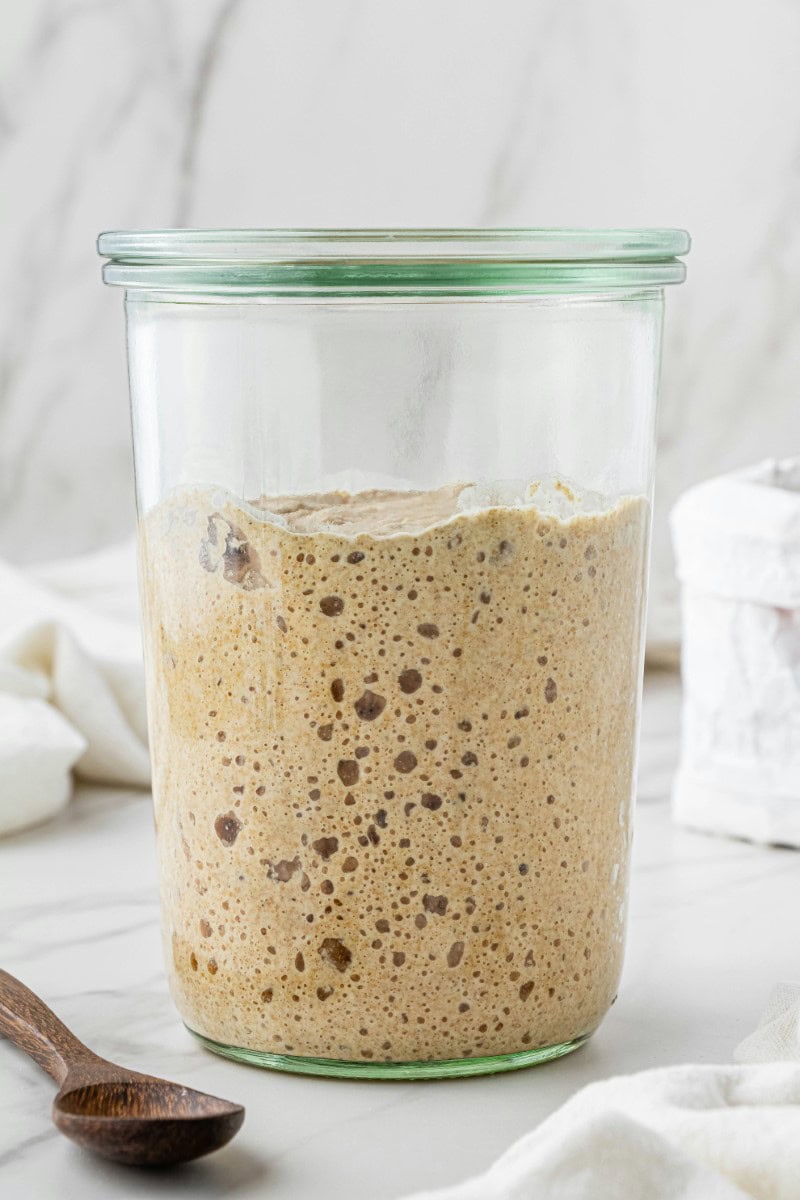
On day 2 or 3, you should start to see bubbles. It is also normal to smell a slightly sour smell. By day 4, the mixture should be getting bubblier and starting to rise.
By day 5, the starter should be active. If it still hasn’t risen much, try feeding it twice a day for the next couple of days. It should peak by day 7.
Your starter is ready when it consistently doubles in size within 4–6 hours after feeding, has a yeasty/slightly tangy aroma, and is full of bubbles throughout.
The float test: drop a small spoonful of starter into a glass of water. If it floats, it is active enough to bake with. If it sinks, keep feeding it for another day or two.
How do I keep my sourdough starter alive?
After the first 7 or 8 days, you no longer must discard any of your starter. You can just feed it flour and water as you use it or daily if it stays out on your counter.
Keep in mind, you don’t want to have too much starter so if you aren’t going to use it, place your starter in the fridge.
How much starter should I keep on hand for baking bread?
Regular sourdough bread bakers will need to keep a batch of starter on hand at all times. You’ll want to keep about 50g to 100g of active sourdough starter. It’s quite risky to keep under 20g, and over 300g can be a waste. It totally depends on how many loaves you will be baking in a week.
One rule of thumb is after you have removed enough starter for your recipes, be sure to leave at least a cup of starter that you can feed to get to a full bowl of starter.
How often do I have to feed my sourdough bread starter?
If you are going to make sourdough bread on a schedule of 1-2 loaves/week, you can store the starter in the fridge. When you are about 4 – 12 hours from baking, bring it out and add a little flour and water (feed it) and wait until the starter is active to use.
Cover the starter and allow it to sit at room temperature until it has doubled in volume, between 4 and 12 hours. If you aren’t using it for baking, discard some and feed it again about 12-24 hours after the last feeding, or go ahead and place it in the refrigerator.
You can store your starter for about 2 months in the refrigerator without it being fed. But if you will be baking with it weekly, you will need to feed it at least once a week. You can switch back and forth between leaving it on the counter and storing it in the fridge.
Whenever you are feeding your starter on the counter, leave it in a large mason jar or a bowl with a towel over it. However, once you put it into the fridge, place an airtight lid on the container.
How do I know if my starter is ready to be used?
If your starter has been fed between 4 to 12 hours before starting your dough, then it is active. To know if it is ready to be used in a recipe, add about 1 to 2 cups of water. To a bowl. Place a small amount of starter in the water. If it floats, it is ready to make your bread.
What will I need to bake sourdough bread?
So you have active starter, and you’re ready to bake some bread! Here is what you will need:
- Kitchen scale or measuring spoons and cups
- Large bowl
- Bread pans (I prefer non-stick). Some people use a Dutch oven to retain more moisture in the dough.
How will I know my dough has risen enough for light, airy bread?
I like to use the poke test for a good rise of bread dough. If you poke the center of the dough and it springs back quickly, it is under proofed and needs more time. If it springs back slowly, it is properly proofed. If it doesn’t spring back at all, it is over proofed.
What to do if your dough is over proofed: gently deflate the dough and then reshape it into a tight loaf. The dough will rise much faster the second time, often within 20 minutes. Keep a close eye on the final rise.
What makes this a loaf bread recipe?
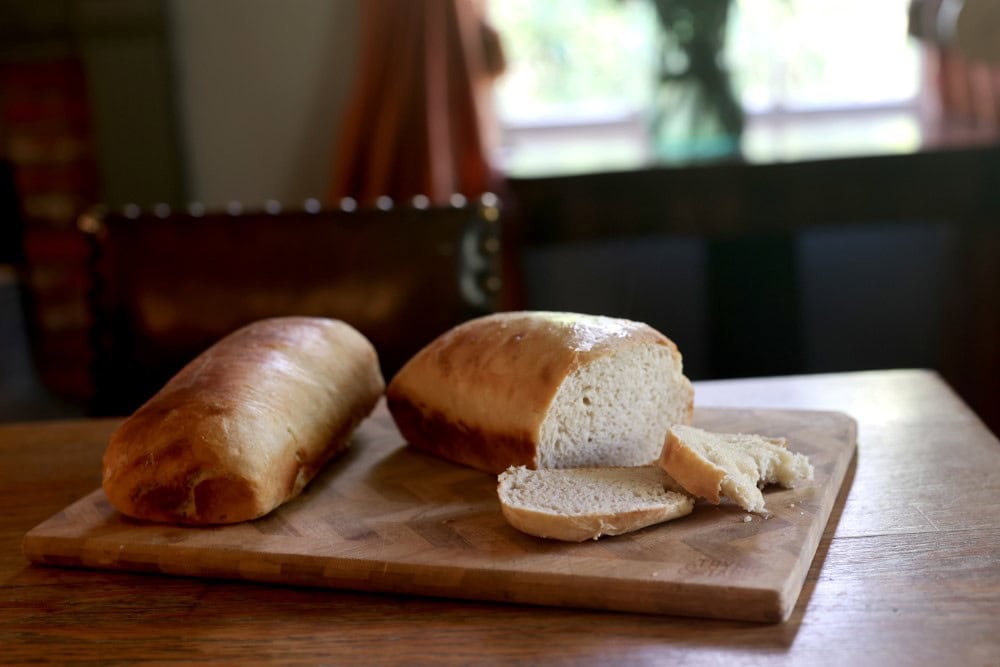
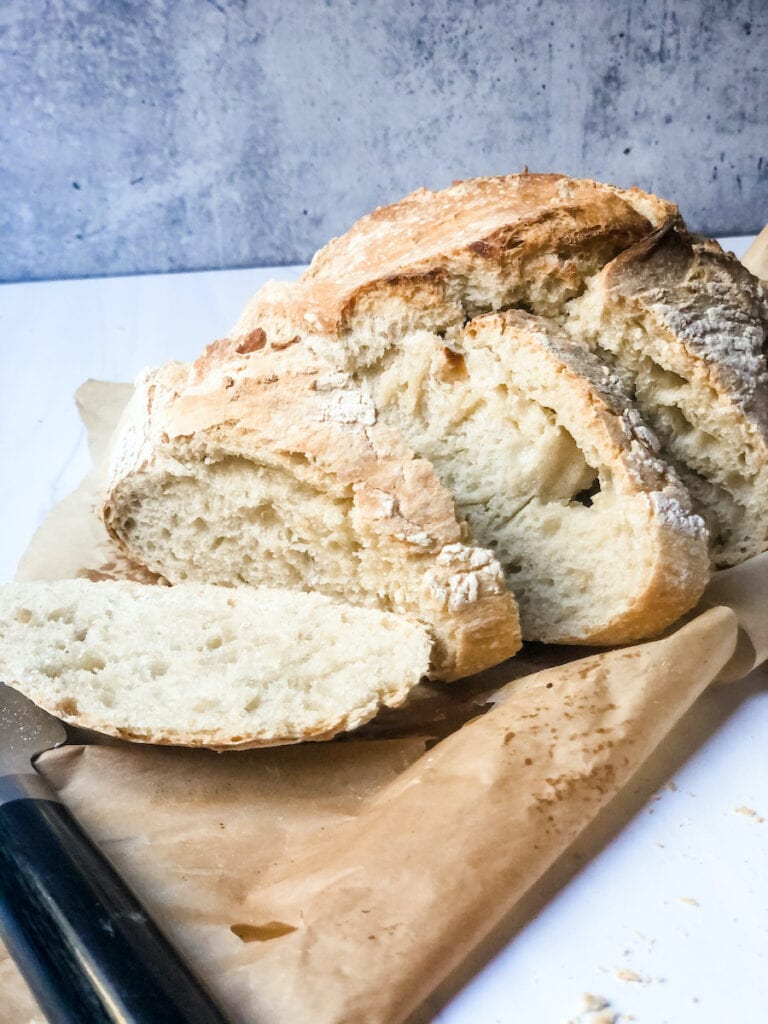
This sourdough bread recipe also could be made into an artisan bread. However, by flattening it out after proofing to create two loaves, you knock out any air that may make large holes in the bread. This creates a more structured, dense bread for slicing.
More Homemade Bread Recipes


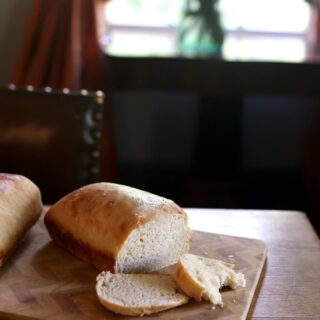
Sourdough Bread Recipe
Ingredients
- 700 g warm water (3 cups) 90 to 95 degrees
- 200 g mature sourdough starter (1 cup)
- 112 g sugar (about 1/2 cup)
- 1000 g bread flour (8 cups)
- 24 g kosher salt (1 tablespoon and 1 teaspoon)
- 40 g oil (1/8 cup)
Instructions
- In a large bowl, add the water and ripe sourdough starter and whisk until the starter is fully dissolved. Add the sugar and whisk again. In a medium bowl, stir flour and salt together. Add the flour mixture and oil to the starter-water mixture and stir with a spatula until completely combined.
- Cover the bowl and let the dough rest for 8 -12 hours, or until the dough nearly doubles.
- Lightly grease 2 loaf pans.
- Gently turn the dough out onto a lightly floured surface. Shape into a rectangle. Cut the dough in half with a sharp knife and shape each half into a loaf. Place each sourdough loaf into the prepared loaf pans, seam side down. Let the dough rise for about 3 hours or until it is about 1 inch from the rim of the pan.
- About an hour before baking, preheat the oven to 425°F.
- Once the dough has risen fully, uncover and bake bread for 45 to 55 minutes, or until the crust is golden brown and the internal temperature reaches 204°F.
- Remove each loaf from the oven. Turn the loaves out and place them on a cooling rack for at least an hour before slicing.