How to Make Perfect Hard-Boiled Eggs
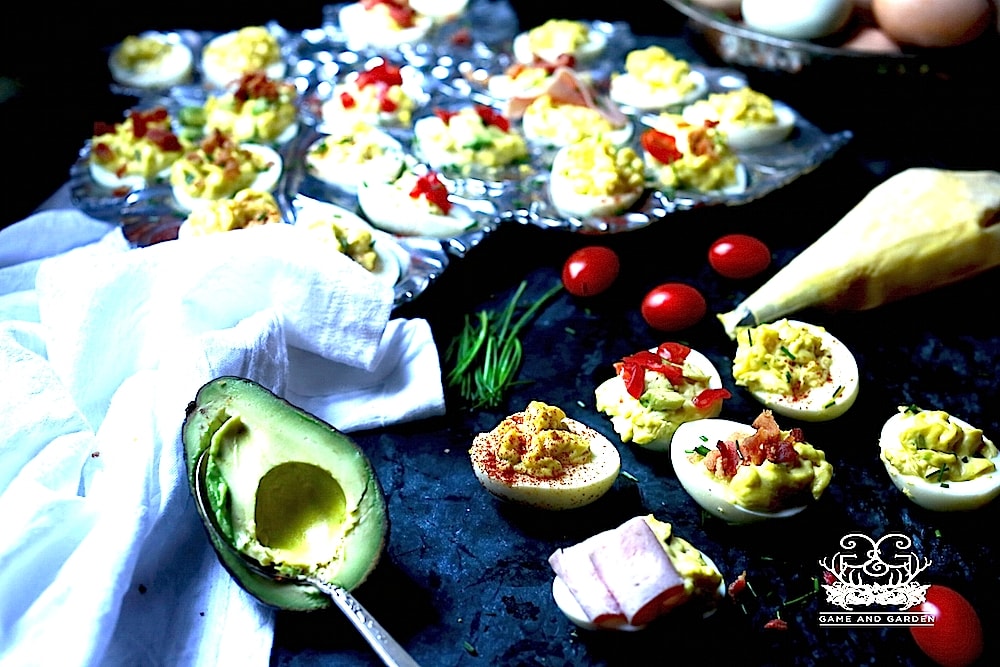
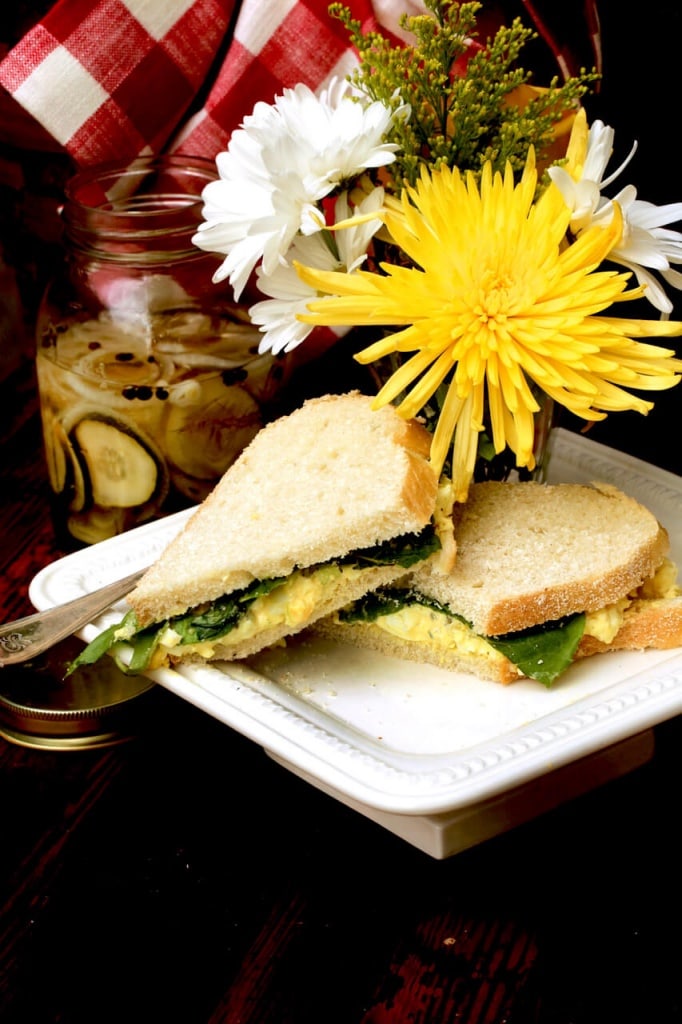
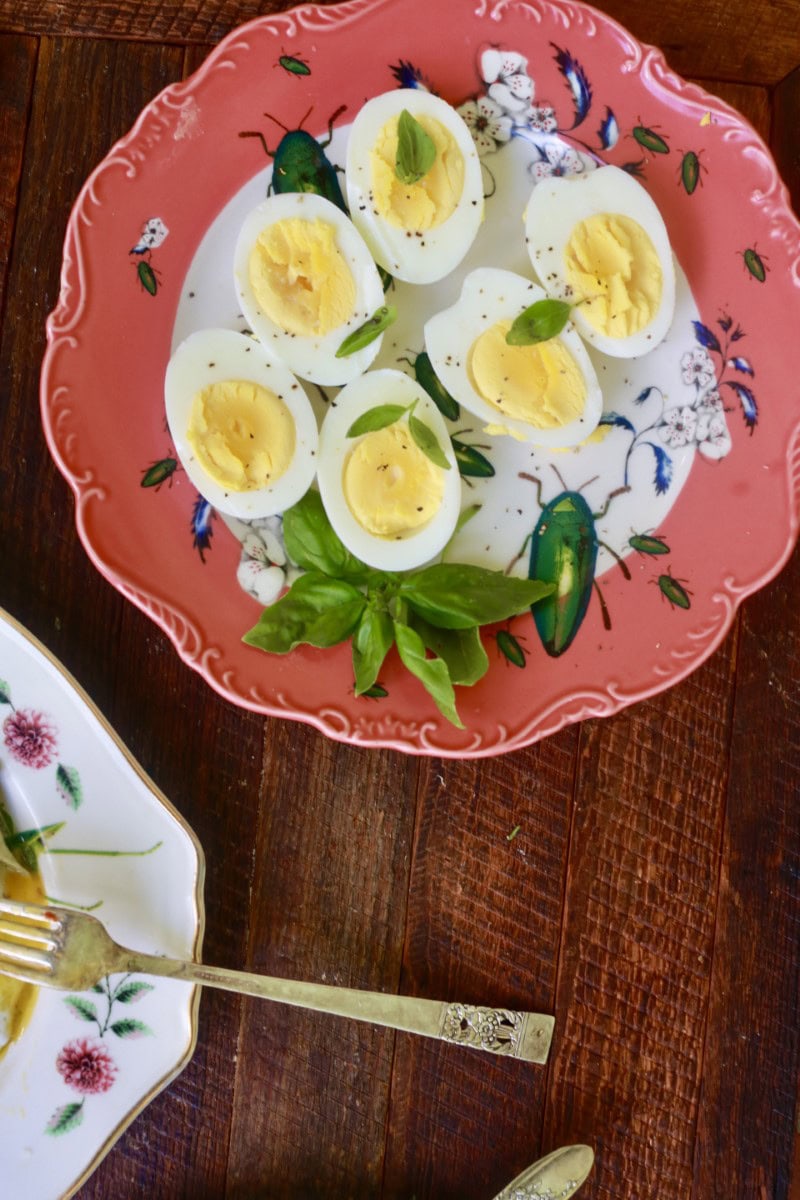
Hard-boiled eggs are incredibly versatile. Two of my favorite ways to eat them is as deviled eggs and in egg salad sandwiches. You can also slice them into greens-and-protein power salads or as a garnish for tuna salad. Or just eat one with a sprinkle of salt and pepper as a quick, portable snack!
How to Boil Eggs and Peel Them Cleanly
Have you ever noticed that boiled eggs are easier to peel when you use older eggs? There is a good reason for that. Fresh eggs like the ones we get from our chickens are naturally acidic (low pH) with whites closely bonded to the inner shell membrane. That makes them hard to peel cleanly. Over time, though, eggs become more alkaline as carbon dioxide escapes through the shell. As a result, older eggs peel more easily.
For whisking and baking egg whites in a recipe, some cooks say fresh eggs are preferable because the proteins are more tightly bonded. The eggs require more whipping to create a lot of foam, but the foam will stay more stable than with older eggs.
Boil the Eggs
The first step of the cooking process is to get the water in your saucepan to a rolling boil. Starting the eggs in already boiling water helps prevent the egg white from merging to the inner shell.
- For Fresh Eggs: To further keep egg shells from bonding to the eggs after being boiled, add a teaspoon of baking soda to the water to make it more alkaline.
- Rolling Boil: Make sure there’s enough water in the pot to cover eggs and bring it to a rolling boil before adding the eggs. If adding baking soda, add it during this boiling process.
- Add Eggs: Gently lower eggs with a a slotted spoon into the boiling water.
- Timing is Everything: Lower the water temperature to a gentle boil and use a kitchen timer (or your phone timer) to cook for the allotted time:
- 6 to 8 minutes for jammy yolks
- 11-12 minutes for firm yolks
- 13-14 minutes for pale, dry yolks
Give the Eggs an Ice Bath
For easy-peel eggs, this step is imperative. Because the temperature drops so drastically from the hot water to the ice bath, the egg will shrink inside the shell, creating a gap between the shell and the egg and making it easier to peel. The ice bath will also keep the eggs from cooking, therefore not getting overdone.
- Prepare the Bath: While the eggs are boiling, fill a large bowl with ice and a little water. The hot eggs will create more liquid to surround the eggs.
- Shock the Eggs: Using a slotted spoon, remove the eggs from the boiling water to the bowl of ice water.
- Time the Ice Bath: Leave the eggs in the cold water for at least 10–15 minutes until they are cold to the touch.
Two Easy Peeling Techniques
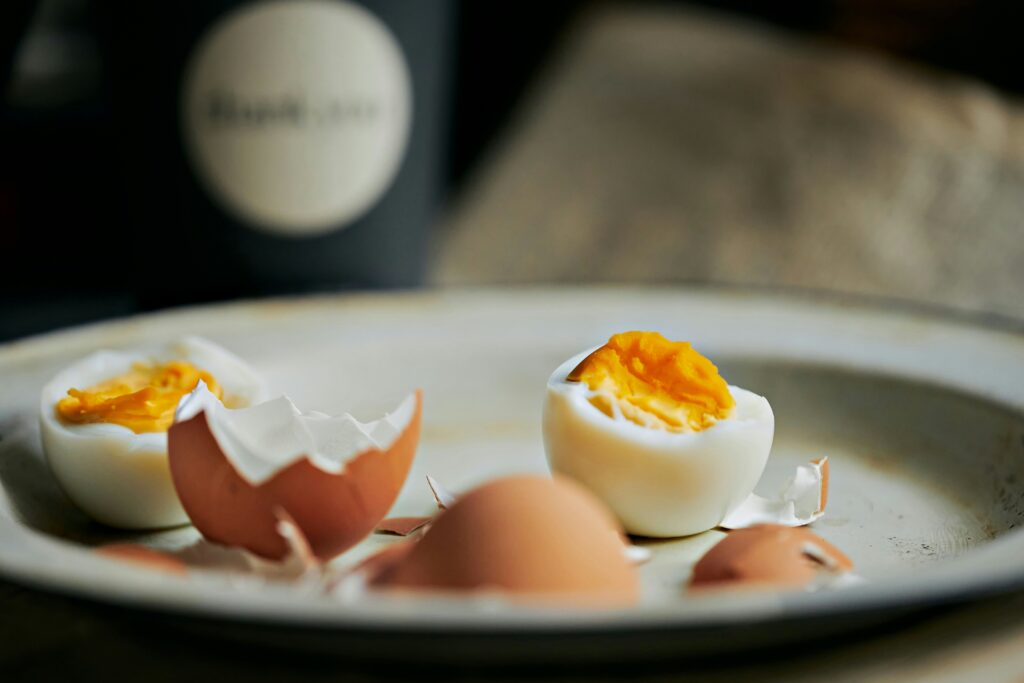
- Crack Eggs All Over by Rolling on the Counter: This will loosen the shell completely from the egg.
- Peel Under Water: Start peeling the egg at the wider base under running water.
Ways to Serve Hard-Boiled Eggs
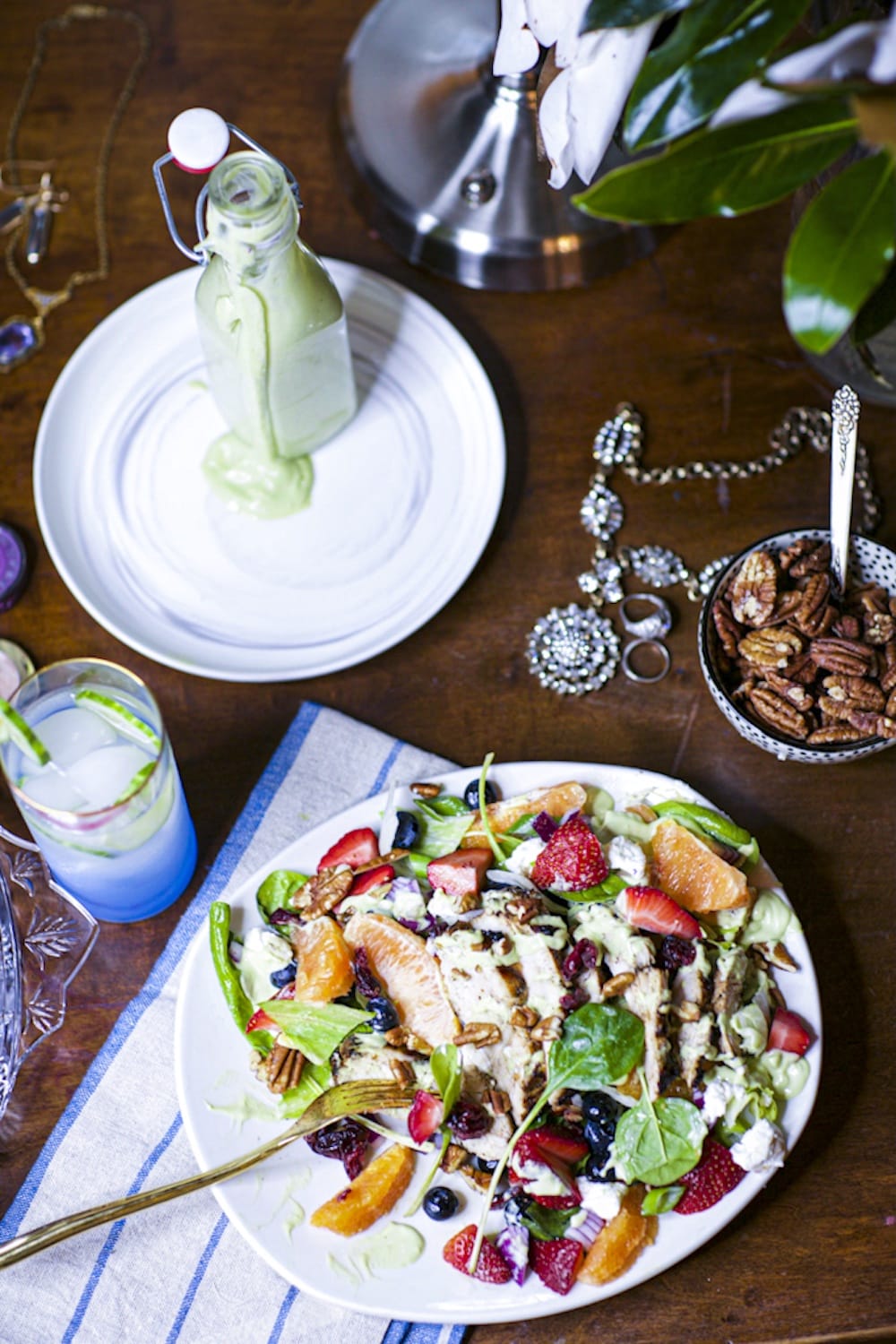
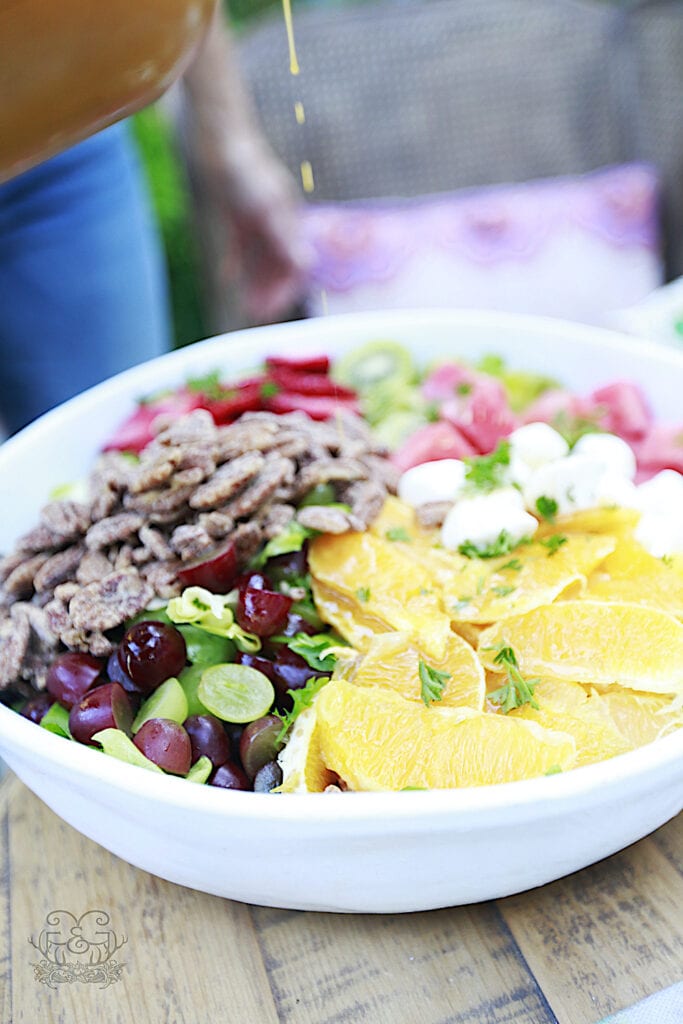
Here are a few of my favorite recipes with hard-boiled eggs. You can add them to just about any salad for extra protein and flavor.